SPEECHTEXTER
...

Soral Alain - Sociologie Du Dragueur.pdf !!link!! May 2026

In conclusion, Alain Soral’s work on pickup culture offers a thought-provoking sociological analysis of this complex and multifaceted phenomenon. By exploring the psychological, cultural, and historical contexts of pickup artistry, Soral provides a nuanced understanding of the ways in which relationships are constructed, performed, and commodified in modern society. As we continue to navigate the complexities of intimacy, attachment, and love in the 21st century, Soral’s insights in “Sociologie du dragueur” remain as relevant and timely as ever.

Throughout “Sociologie du dragueur,” Soral critiques modern society for its emphasis on individualism, narcissism, and superficiality. Soral argues that the rise of pickup culture is a symptom of a broader societal malaise, characterized by a decline in meaningful relationships and a growing sense of disconnection. By examining the world of pickup artistry, Soral aims to shed light on the underlying pathologies of modern society and to encourage readers to think critically about the values and norms that shape our relationships. Soral Alain - Sociologie du dragueur.pdf

The Sociology of Pickup Artists: An Exploration of Soral Alain’s Work** In conclusion, Alain Soral’s work on pickup culture

Another important aspect of Soral’s analysis is the commodification of relationships in pickup culture. Soral contends that the rise of pickup artistry is linked to broader societal trends, such as the increasing commercialization of relationships and the decline of traditional social norms. In this context, relationships are often reduced to a series of transactions, with individuals seeking to maximize their “returns” on investment. This commodification of relationships has significant implications for our understanding of intimacy, attachment, and love. The Sociology of Pickup Artists: An Exploration of

Pickup artistry, also known as seduction or pickup culture, refers to the practice of approaching and seducing strangers, often with the goal of forming a romantic or sexual connection. Proponents of pickup artistry argue that it is a skill that can be learned and mastered, with various techniques and strategies employed to increase one’s chances of success. Critics, however, view pickup artistry as a form of manipulation or exploitation, where individuals use coercive tactics to achieve their objectives.

One of the key themes in Soral’s work is the performance of masculinity in pickup culture. Soral argues that traditional notions of masculinity are often tied to ideals of dominance, aggression, and control. In the context of pickup artistry, these ideals are played out through the use of various tactics and strategies designed to assert dominance over potential partners. However, Soral also suggests that this performance of masculinity is often fragile and tenuous, requiring constant reinforcement and validation.

In the realm of social dynamics and interpersonal relationships, few topics have garnered as much attention and controversy as the art of seduction. At the forefront of this discussion is Alain Soral, a French writer and philosopher who has extensively explored the sociology of pickup artists in his work, particularly in his book “Sociologie du dragueur” (Sociology of the Pickup Artist). This article aims to delve into Soral’s insights on the subject, examining the sociological implications of pickup culture and its significance in contemporary society.

SpeechTexter is a free multilingual speech-to-text application aimed at assisting you with transcription of notes, documents, books, reports or blog posts by using your voice. This app also features a customizable voice commands list, allowing users to add punctuation marks, frequently used phrases, and some app actions (undo, redo, make a new paragraph).

SpeechTexter is used daily by students, teachers, writers, bloggers around the world.

It will assist you in minimizing your writing efforts significantly.

Voice-to-text software is exceptionally valuable for people who have difficulty using their hands due to trauma, people with dyslexia or disabilities that limit the use of conventional input devices. Speech to text technology can also be used to improve accessibility for those with hearing impairments, as it can convert speech into text.

It can also be used as a tool for learning a proper pronunciation of words in the foreign language, in addition to helping a person develop fluency with their speaking skills.

using speechtexter to dictate a text

Accuracy levels higher than 90% should be expected. It varies depending on the language and the speaker.

No download, installation or registration is required. Just click the microphone button and start dictating.

Speech to text technology is quickly becoming an essential tool for those looking to save time and increase their productivity.

Features

Powerful real-time continuous speech recognition

Creation of text notes, emails, blog posts, reports and more.

Custom voice commands

More than 70 languages supported

Technology

SpeechTexter is using Google Speech recognition to convert the speech into text in real-time. This technology is supported by Chrome browser (for desktop) and some browsers on Android OS. Other browsers have not implemented speech recognition yet.

Note: iPhones and iPads are not supported

List of supported languages:

Afrikaans, Albanian, Amharic, Arabic, Armenian, Azerbaijani, Basque, Bengali, Bosnian, Bulgarian, Burmese, Catalan, Chinese (Mandarin, Cantonese), Croatian, Czech, Danish, Dutch, English, Estonian, Filipino, Finnish, French, Galician, Georgian, German, Greek, Gujarati, Hebrew, Hindi, Hungarian, Icelandic, Indonesian, Italian, Japanese, Javanese, Kannada, Kazakh, Khmer, Kinyarwanda, Korean, Lao, Latvian, Lithuanian, Macedonian, Malay, Malayalam, Marathi, Mongolian, Nepali, Norwegian Bokmål, Persian, Polish, Portuguese, Punjabi, Romanian, Russian, Serbian, Sinhala, Slovak, Slovenian, Southern Sotho, Spanish, Sundanese, Swahili, Swati, Swedish, Tamil, Telugu, Thai, Tsonga, Tswana, Turkish, Ukrainian, Urdu, Uzbek, Venda, Vietnamese, Xhosa, Zulu.

Instructions for web app on desktop (Windows, Mac, Linux OS)


Requirements: the latest version of the Google Chrome [↗] browser (other browsers are not supported).

1. Connect a high-quality microphone to your computer.

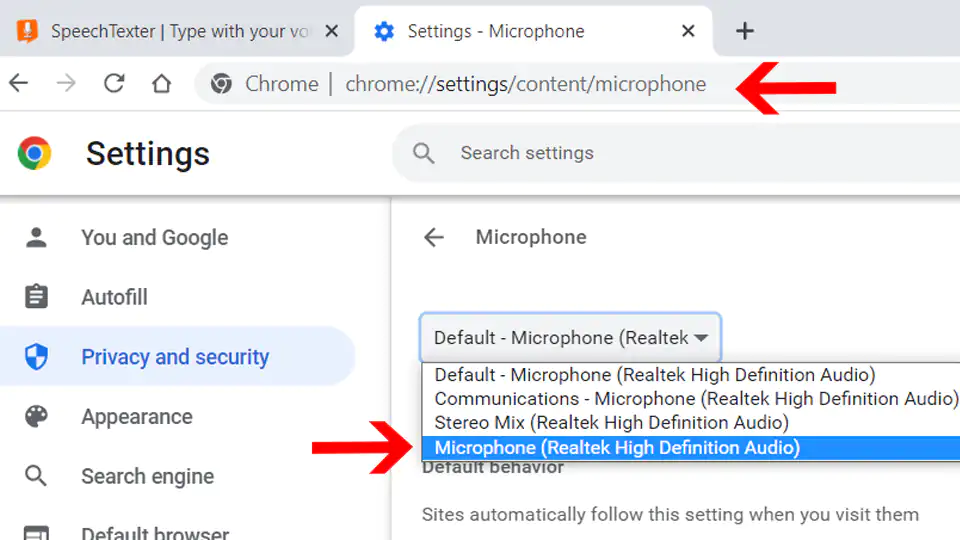
2. Make sure your microphone is set as the default recording device on your browser.

To go directly to microphone's settings paste the line below into Chrome's URL bar.

chrome://settings/content/microphone


Set microphone as default recording device

To capture speech from video/audio content on the web or from a file stored on your device, select 'Stereo Mix' as the default audio input.

3. Select the language you would like to speak (Click the button on the top right corner).

4. Click the "microphone" button. Chrome browser will request your permission to access your microphone. Choose "allow".

Allow microphone access

5. You can start dictating!

Instructions for the web app on a mobile and for the android app (the android app is no longer supported)


Requirements:
- Google app [↗] installed on your Android device.
- Any of the supported browsers if you choose to use the web app.

Supported android browsers (not a full list):
Chrome browser (recommended), Edge, Opera, Brave, Vivaldi.

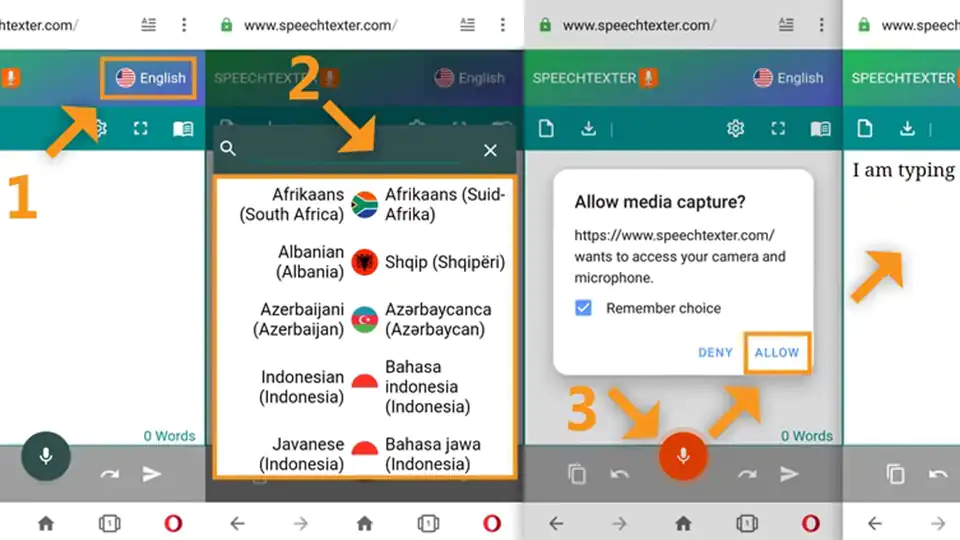
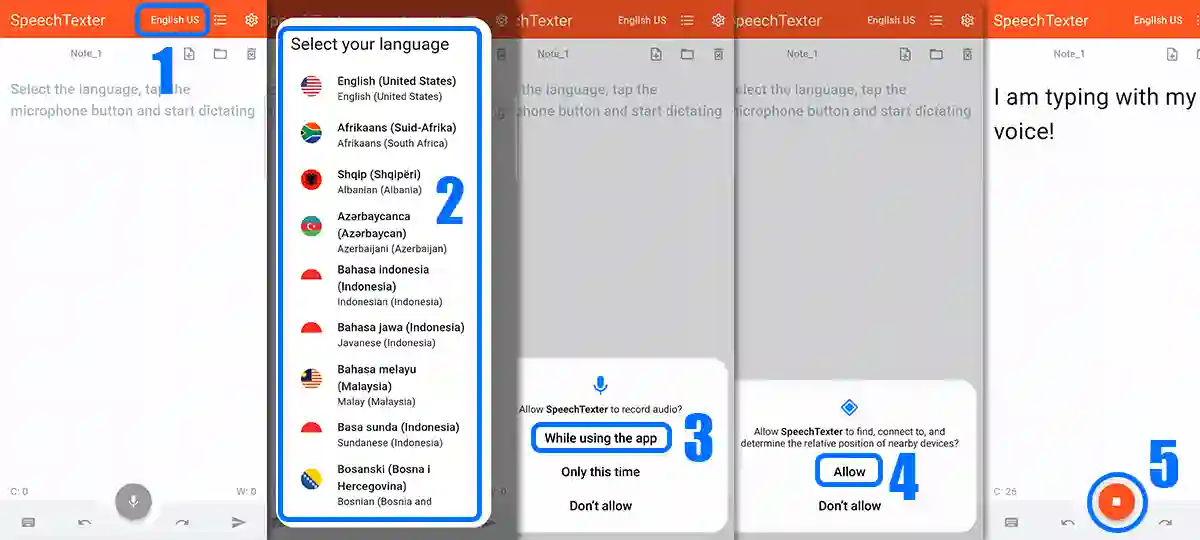
1. Tap the button with the language name (on a web app) or language code (on android app) on the top right corner to select your language.

2. Tap the microphone button. The SpeechTexter app will ask for permission to record audio. Choose 'allow' to enable microphone access.

instructions for the web app
web app

instructions for the android app
android app

3. You can start dictating!

In conclusion, Alain Soral’s work on pickup culture offers a thought-provoking sociological analysis of this complex and multifaceted phenomenon. By exploring the psychological, cultural, and historical contexts of pickup artistry, Soral provides a nuanced understanding of the ways in which relationships are constructed, performed, and commodified in modern society. As we continue to navigate the complexities of intimacy, attachment, and love in the 21st century, Soral’s insights in “Sociologie du dragueur” remain as relevant and timely as ever.

Throughout “Sociologie du dragueur,” Soral critiques modern society for its emphasis on individualism, narcissism, and superficiality. Soral argues that the rise of pickup culture is a symptom of a broader societal malaise, characterized by a decline in meaningful relationships and a growing sense of disconnection. By examining the world of pickup artistry, Soral aims to shed light on the underlying pathologies of modern society and to encourage readers to think critically about the values and norms that shape our relationships.

The Sociology of Pickup Artists: An Exploration of Soral Alain’s Work**

Another important aspect of Soral’s analysis is the commodification of relationships in pickup culture. Soral contends that the rise of pickup artistry is linked to broader societal trends, such as the increasing commercialization of relationships and the decline of traditional social norms. In this context, relationships are often reduced to a series of transactions, with individuals seeking to maximize their “returns” on investment. This commodification of relationships has significant implications for our understanding of intimacy, attachment, and love.

Pickup artistry, also known as seduction or pickup culture, refers to the practice of approaching and seducing strangers, often with the goal of forming a romantic or sexual connection. Proponents of pickup artistry argue that it is a skill that can be learned and mastered, with various techniques and strategies employed to increase one’s chances of success. Critics, however, view pickup artistry as a form of manipulation or exploitation, where individuals use coercive tactics to achieve their objectives.

One of the key themes in Soral’s work is the performance of masculinity in pickup culture. Soral argues that traditional notions of masculinity are often tied to ideals of dominance, aggression, and control. In the context of pickup artistry, these ideals are played out through the use of various tactics and strategies designed to assert dominance over potential partners. However, Soral also suggests that this performance of masculinity is often fragile and tenuous, requiring constant reinforcement and validation.

In the realm of social dynamics and interpersonal relationships, few topics have garnered as much attention and controversy as the art of seduction. At the forefront of this discussion is Alain Soral, a French writer and philosopher who has extensively explored the sociology of pickup artists in his work, particularly in his book “Sociologie du dragueur” (Sociology of the Pickup Artist). This article aims to delve into Soral’s insights on the subject, examining the sociological implications of pickup culture and its significance in contemporary society.