04 Sep 2015 - 2 min read
Join Kendo UI Development Seminar London
Kendo UI Development: The tendency of building groundbreaking mobile and web applications is unlikely to wear off and become a…
Historically, the Indian woman’s identity was tied to the threefold role of daughter, wife, and mother. In rural areas, this lifestyle is labor-intensive. Women fetch water, tend to livestock, and gather firewood while also managing childcare. In urban settings, the "Supermom" archetype prevails. Even when holding corporate jobs, studies show that Indian women spend nearly ten times more hours on unpaid domestic chores than men. The culture of “adjustment” (compromise) is drilled into young girls, making them natural managers of household finances and social harmony.
The lifestyle and culture of Indian women are not static. It is a living organism—absorbing the best of the digital age while filtering out the harshest aspects of tradition. Today’s Indian woman can kneel to touch her elder’s feet for a blessing ( ashirwad ) in the morning and fly a commercial airplane in the afternoon. She struggles against wage gaps and safety issues but triumphs in academic exams and entrepreneurial ventures. To understand Indian women is to understand contradiction: deeply traditional yet rapidly modern, collective yet fiercely individual, bound by culture yet breaking every chain. Their journey is, ultimately, the journey of India itself.
The lifestyle and culture of Indian women cannot be distilled into a single narrative. India is a land of extreme diversity—divided by 22 official languages, hundreds of dialects, varied religions, and distinct regional customs. Consequently, the life of a woman in a bustling metro like Mumbai is vastly different from that of a woman in a rural village in Bihar or a tribal community in Nagaland. Yet, beneath this diversity, common threads of resilience, familial devotion, and a deep-rooted cultural identity persist. The story of the Indian woman is one of duality: balancing ancient traditions with the relentless pace of modern globalization. Chennai Aunty Boobs Pressing Small Boy Video Peperonity
Culture dictates the rhythm of daily life for most Indian women. The traditional concept of “Indianness” is often tied to the joint family system, where women serve as the cultural anchors. For many, the day begins with rituals such as drawing kolams (rice flour designs) at the doorstep, lighting lamps at the family temple, or practicing yoga. Attire remains a significant cultural marker. While the saree —a six-yard unstitched drape—is the quintessential garment for many, women in the north often prefer salwar kameez , while in the northeast, mekhela chadors or modern western wear dominate.
Festivals are a cornerstone of female life. Whether it is Karva Chauth (where wives fast for their husbands), Durga Puja, or Pongal, women are the primary planners and performers of religious rites. Food culture is also heavily gendered; cooking is not just sustenance but an art form passed from mother to daughter, with recipes for pickles and sweets guarded as family heirlooms. Historically, the Indian woman’s identity was tied to
The last two decades have witnessed a seismic shift. Education has become a priority for the middle-class Indian family. Women are no longer just home-makers; they are pilots, soldiers (increasingly in combat roles), entrepreneurs, and scientists (witness the role of women in ISRO’s Mars mission). The urban lifestyle now includes co-working spaces, networking events, and late-night offices. However, this liberation comes with the "double burden"—the expectation to excel at the office while remaining the primary caretaker at home.
Despite progress, the shadow of patriarchy remains. Issues like dowry, gender-biased sex selection (the "missing girls" phenomenon), and stringent dress codes in certain communities persist. The lifestyle of a young Indian woman often involves navigating "Eve-teasing" (street harassment) and safety concerns, which restricts mobility. Yet, resistance is growing. The #MeToo movement in India, the Sabarimala temple entry protests, and widespread outrage over crimes against women indicate a cultural awakening. In urban settings, the "Supermom" archetype prevails
The Evolving Tapestry: Lifestyle and Culture of Indian Women

Since 2008, BGO Software has been providing dedicated IT teams to Fortune
100
Pharmaceutical Corporations, Government and Healthcare Organisations, and educational
institutions.
If you’re looking to flexibly increase capacity without hiring, check out:
On-Demand IT Talent Product Development as a Service

We help startups, scale-ups & SMEs create cutting-edge healthcare products and solutions by providing them with the technical consultancy and support they need to break through.
If you’re looking to scope and validate your Health solution, check out:
Project CTO as a Service

Wonder what it takes to solve some of the toughest problems in Health (and how to come up with high-standard, innovative solutions)?
Have a look at our latest work in digital health:
Browse our case studies

We help healthcare companies worldwide get the value, speed, and scalability they need-without compromising on quality. You’ll be amazed of how within-reach top service finally is.
Have a project in mind?
Contact us
Kendo UI Development: The tendency of building groundbreaking mobile and web applications is unlikely to wear off and become a…
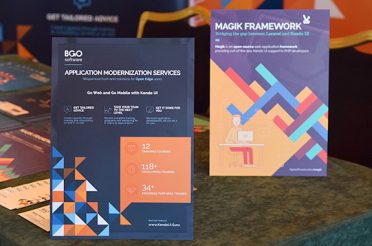
Progress Software has been one of the pioneer technology companies globally for the past 35 years. Their technologies and products…
In today’s highly technological world, web and mobile applications, tech-modernization and computer software are business necessities. Various business functions, especially…

In the past WordPress was mistakenly underestimated and classified as just a platform for blogging. Today, it is the world’s…

Modernizing business-focused applications enables better business agility, simplifies prolonged procedures and aligns corporate strategies and business logistics with app functionalities. It…

Hello!
Did you know that BGO Software is one of the only companies strictly specialising in digital health IT talent and tech leadership?
Our team has over 15 years of experience helping health startups, Fortune 100 enterprises, and governments deliver leading healthcare tech solutions.
If you want to explore your options, would you like to book a free consultation call today?